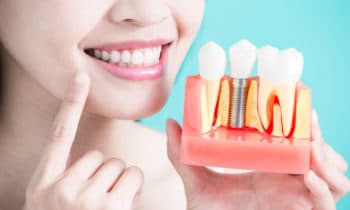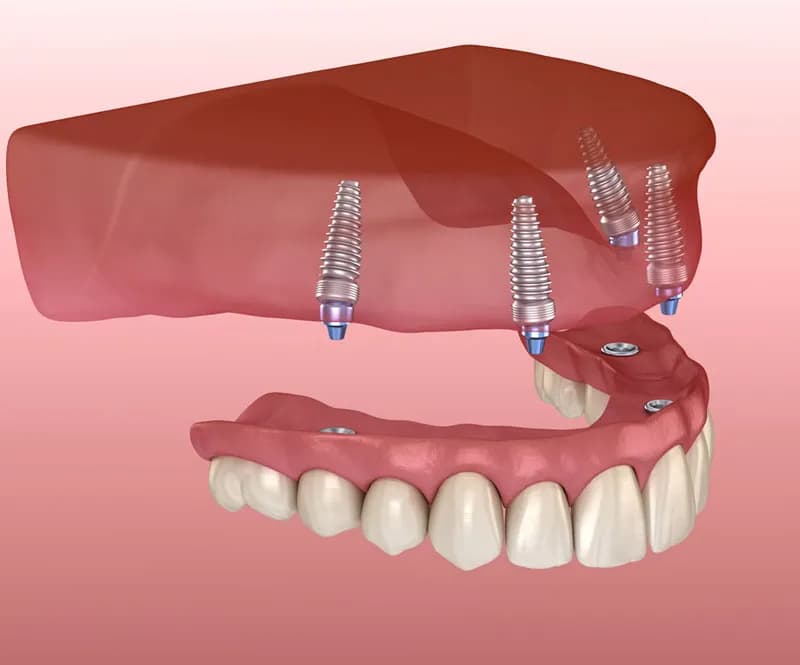
Traditional dentures rest on your gums and are held in place by suction or adhesive. Implant-supported dentures snap onto two to six implants anchored in your jawbone. Same idea, very different experience.
Eating
Traditional dentures restore about 25–30% of natural chewing force. Implant-supported options restore 70–95%—meaning steak, salads, raw vegetables, and crusty bread are back on the menu.
Comfort and stability
Traditional dentures can rock, slip, and cause sore spots—especially over time as the jawbone shrinks. Implant-supported dentures stay put, so you can talk, laugh, and yawn without worry.
Bone preservation
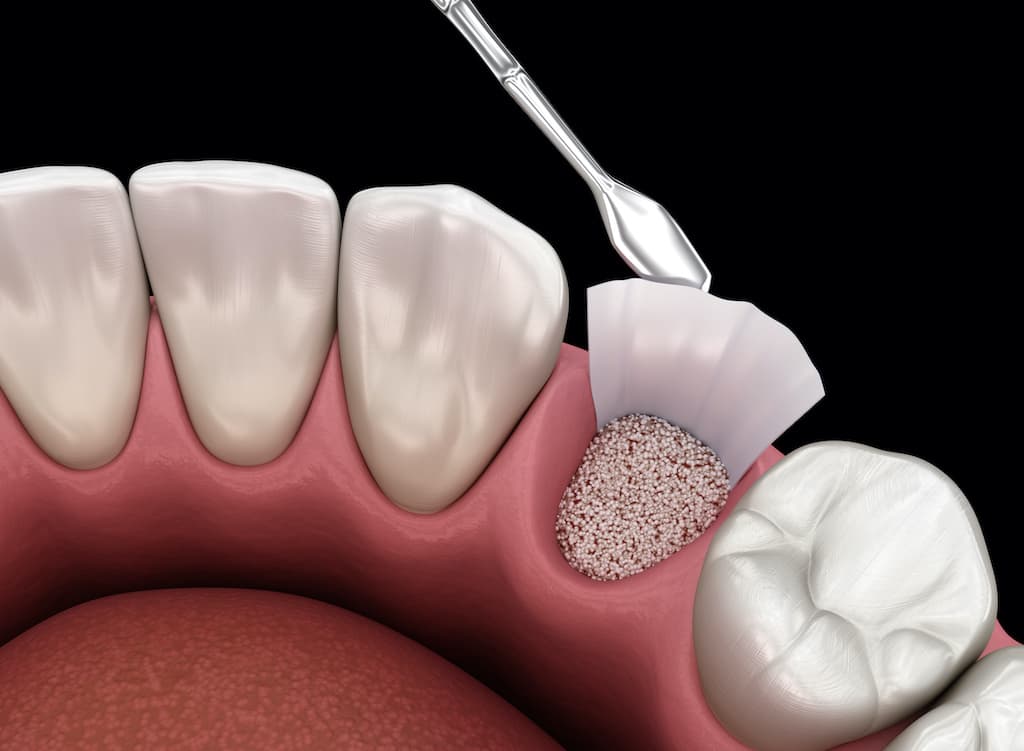
This is the biggest hidden benefit. Implants stimulate the jawbone the way natural tooth roots do, slowing or stopping bone loss. Traditional dentures actually accelerate bone loss because there is no stimulation.
Maintenance
- Traditional: nightly soak, daily brush, relines every 2–3 years, replacement every 5–7
- Implant-supported: daily clean as usual, attachment retention parts replaced every 1–2 years, denture replacement every 10–15
Cost
Traditional dentures cost less upfront. Implant-supported dentures cost more initially but require fewer replacements and far fewer relines, often making them comparable over a 15-year horizon. Financing is available.
Who chooses what?
Many patients start with traditional dentures and upgrade to implant-supported once they have lived with the limitations. If you are starting fresh, we usually recommend going straight to implants if your bone and budget allow.
Ready to talk to a periodontist?
Comfortable consultations, same-day estimates, and a clear plan—every time.