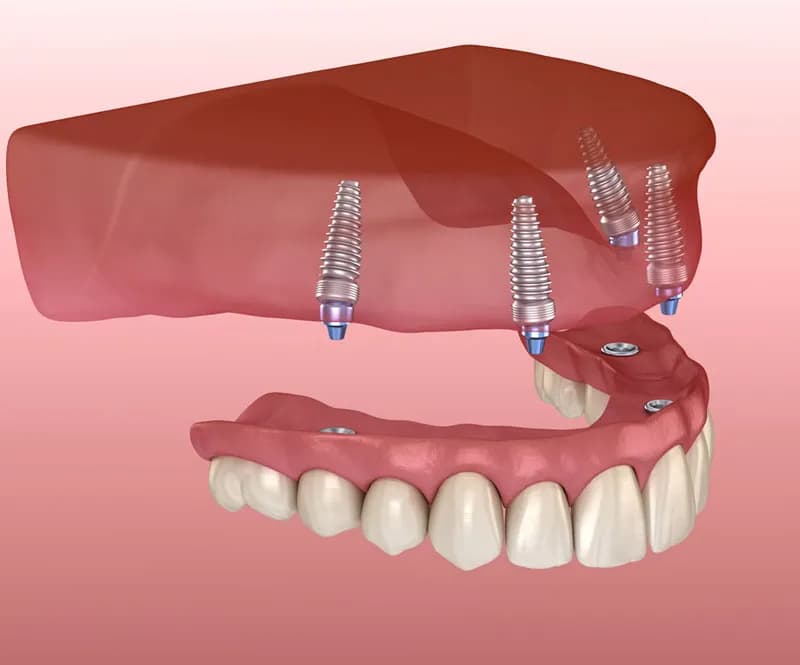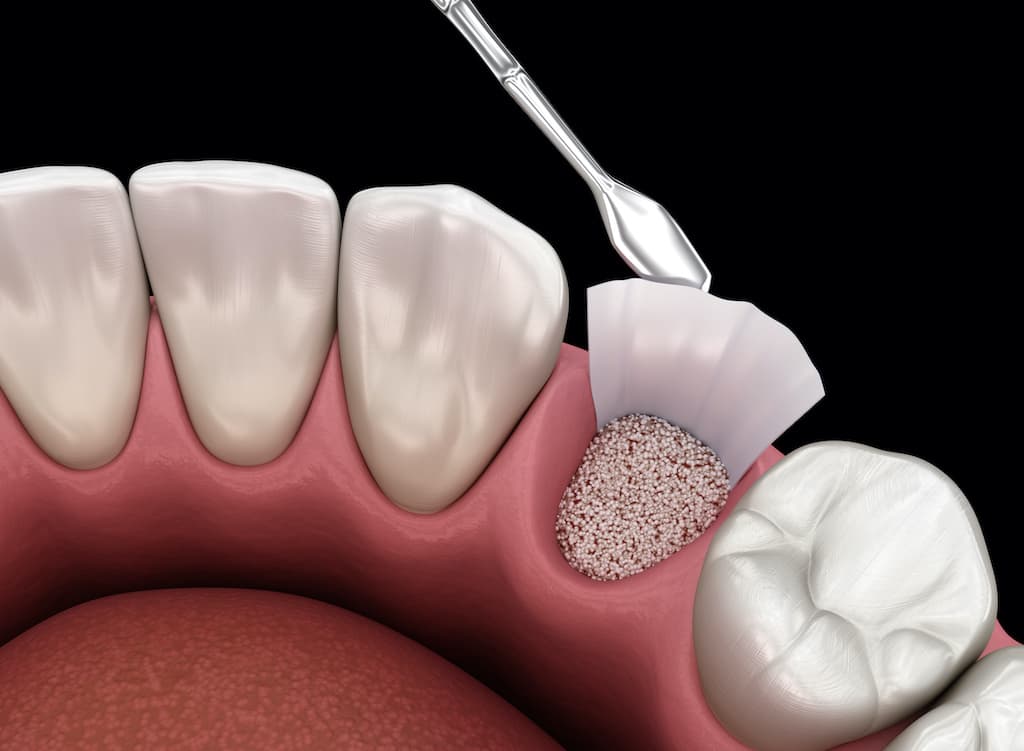
When a tooth is removed and not replaced, the bone that used to support it begins to shrink. After a year, up to 25% of the bone width can be lost. Without enough bone, an implant has nothing to anchor into. A bone graft rebuilds the foundation so an implant can succeed.
Common reasons grafts are needed
- A tooth has been missing for a long time
- Trauma fractured the jawbone or socket
- Periodontal disease destroyed bone before the tooth was removed
- Severe bite forces or grinding accelerated bone loss
- The upper back teeth need a sinus lift to gain vertical bone
Types of grafts we use
- Autograft — bone from your own body, usually a small site nearby
- Allograft — sterile, processed donor bone (most common)
- Xenograft — bone from an animal source, often bovine
- Synthetic — biocompatible materials that act as a scaffold
How the procedure feels
Most grafts are completed in 30–60 minutes under local anesthesia, with sedation available. You will feel pressure, not pain. Sutures are usually dissolvable.
Recovery and timeline
- Mild swelling and discomfort for 3–5 days
- Soft food diet for one week
- Healing collar or membrane stays in place
- 4–6 months for the new bone to mature
- Implant placement once we confirm bone density on a follow-up scan
Can a graft and implant happen together?
Sometimes—especially when the bone loss is small, or when the graft is placed at the same time the tooth is extracted. Your 3D scan tells us the answer.
Ready to talk to a periodontist?
Comfortable consultations, same-day estimates, and a clear plan—every time.